System Architecture
The Buddi system architecture is designed as an integrated, modular, and scalable ecosystem that seamlessly combines affective computing, ambient sensing, and adaptive interaction design. Its architecture ensures real-time emotional support, personalized engagement, and privacy-preserving classroom analytics.
1. Overview
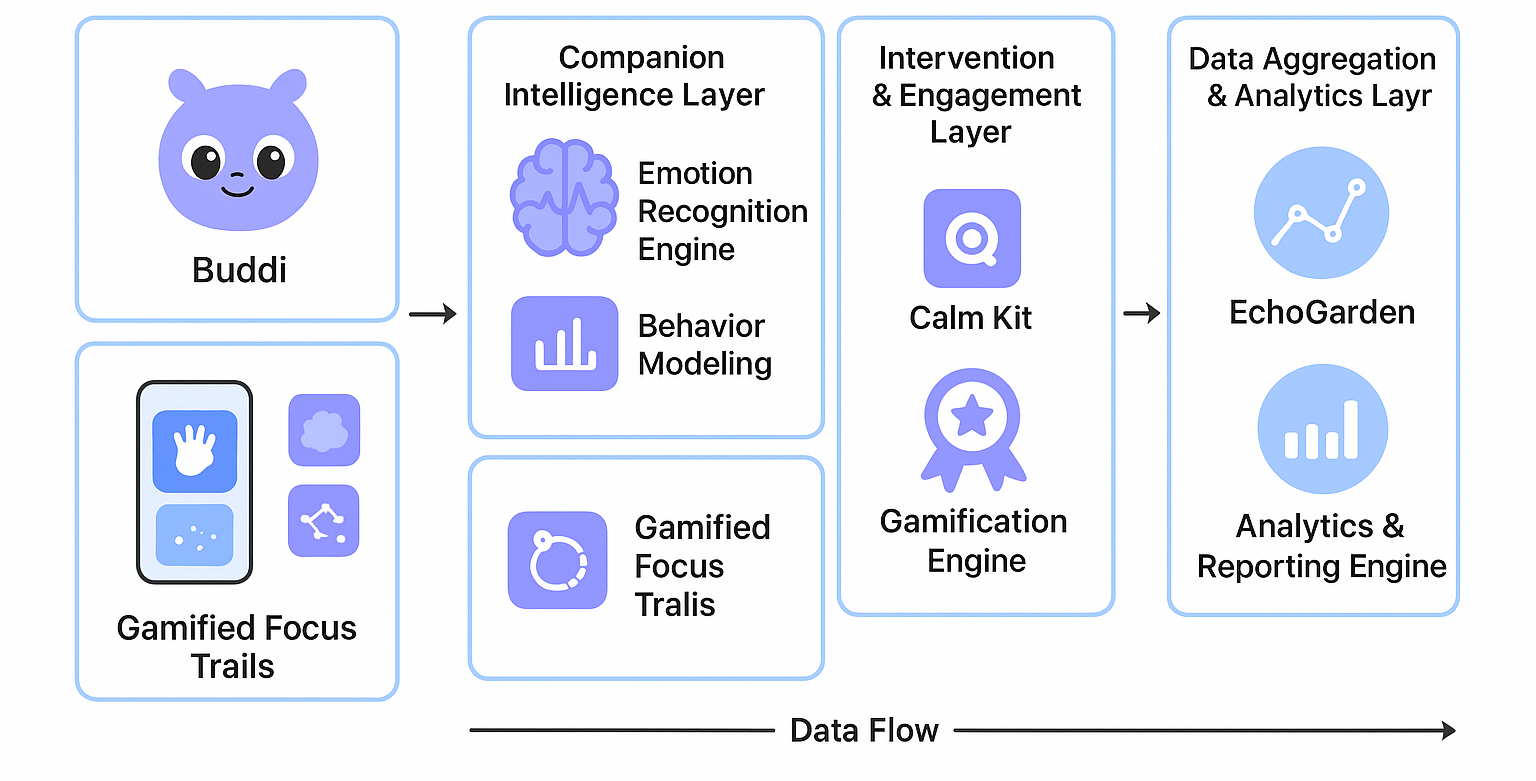
At a high level, Buddi consists of four interconnected layers:
- User Interaction Layer – Interfaces through which students engage with Buddi.
- Companion Intelligence Layer – Core logic managing the virtual companion, emotional modeling, and adaptive behavior.
- Intervention & Engagement Layer – Micro-interventions, gamification modules, and real-time feedback mechanisms.
- Data Aggregation & Analytics Layer – Classroom-level insights, emotion trend mapping, and secure data management.
Each layer communicates through API endpoints and event-driven pipelines, ensuring low-latency response while maintaining data privacy and modularity.
2. Layer Details
A. User Interaction Layer
- Components:
- Virtual Companion UI: A playful, responsive creature that mirrors the student’s mood, engagement, and habits.
- Micro-Intervention Widgets: Sensory-friendly exercises, guided breathing, doodling, and grounding gestures.
- Gamified Focus Trails: Progress bars, constellations, and soft visual cues encouraging task completion and emotional regulation.
- Technology Stack:
- Frontend: React Native / Flutter for cross-platform support.
- UI/UX Framework: Material Design + soft gamification elements.
- Responsibilities:
- Capture student interactions (touch, click, duration, engagement).
- Provide immediate feedback based on the Companion Intelligence Layer.
- Ensure low-stimulation, accessible design for neurodivergent learners.
B. Companion Intelligence Layer
- Components:
- Emotion Recognition Engine: Uses ambient sensor data (optional wearables, keyboard/mouse patterns, facial expressions) to infer emotional states.
- Behavior Modeling Module: Maintains a dynamic profile of each student’s habits, mood patterns, and responsiveness.
- Adaptive Response Generator: Decides appropriate companion reactions, micro-interventions, and encouragement prompts.
- Technology Stack:
- Backend: Python / Node.js
- ML Models: Lightweight affective computing models (TensorFlow Lite or PyTorch Mobile)
- Responsibilities:
- Translate raw sensor input into quantitative emotional metrics.
- Update companion behavior dynamically to ensure meaningful, empathetic interactions.
- Trigger context-aware micro-interventions without disrupting classroom flow.
C. Intervention & Engagement Layer
- Components:
- Micro-Intervention Scheduler: Determines timing and type of interventions based on emotional and engagement data.
- Gamification Engine: Generates soft rewards, progress visualizations, and focus trails to motivate self-regulation.
- Feedback Loop: Collects interaction data to refine intervention effectiveness using reinforcement learning.
- Technology Stack:
- Event-driven backend using WebSockets / MQTT for real-time updates.
- Gamification logic implemented in frontend with server validation for consistency.
- Responsibilities:
- Encourage habit formation and consistent emotional regulation.
- Provide instant, playful feedback to sustain engagement.
- Avoid overstimulation or intrusive notifications.
D. Data Aggregation & Analytics Layer
- Components:
- Classroom Mood Dashboard (EchoGarden): Visualizes aggregated mood patterns across the classroom without exposing individual identities.
- Analytics & Reporting Engine: Generates trend analysis, engagement reports, and intervention effectiveness metrics for educators.
- Secure Storage & Privacy Layer: Ensures data encryption, anonymization, and compliance with privacy standards.
- Technology Stack:
- Database: PostgreSQL / Firebase Realtime Database
- Analytics: Python Pandas / Plotly / D3.js
- Responsibilities:
- Provide actionable insights to teachers while maintaining student privacy.
- Identify stress hotspots or patterns of emotional overload.
- Store longitudinal behavioral data to inform companion personalization over time.
3. Data Flow
- Input: Student interacts via UI or ambient sensors detect emotional cues.
- Processing: Companion Intelligence Layer analyzes inputs and determines emotional state.
- Intervention: Engagement Layer triggers micro-interventions or gamified feedback.
- Aggregation: Data is anonymized and sent to Analytics Layer for classroom-level insights.
- Feedback Loop: Insights refine behavior models, improving future companion responses and interventions.
4. Security & Privacy Considerations
- Data Anonymization: No personally identifiable information stored in aggregated analytics.
- Encrypted Communication: All frontend-backend interactions are over TLS/HTTPS.
- Local-First Processing: Emotion recognition and companion behavior logic can run locally on the device, minimizing cloud dependency.
5. Scalability
- Modular design allows for:
- Adding new interventions or gamification mechanics.
- Extending to multiple classrooms or schools without significant backend reconfiguration.
- Integration with wearables or IoT classroom sensors in the future.
In summary, Buddi’s architecture combines playful, adaptive interaction design with robust emotion analytics to create a scalable, privacy-conscious digital ecosystem that proactively supports neurodivergent learners while empowering educators with actionable, anonymized insights.